
Cold season: Smoking harms immunity more than heating
Two to four colds a year are normal, but smoking damages cilia and prolongs coughing. Cold isn't the cause; it just prepares the ground for viruses.
English · Original discussion in Spanish · Published
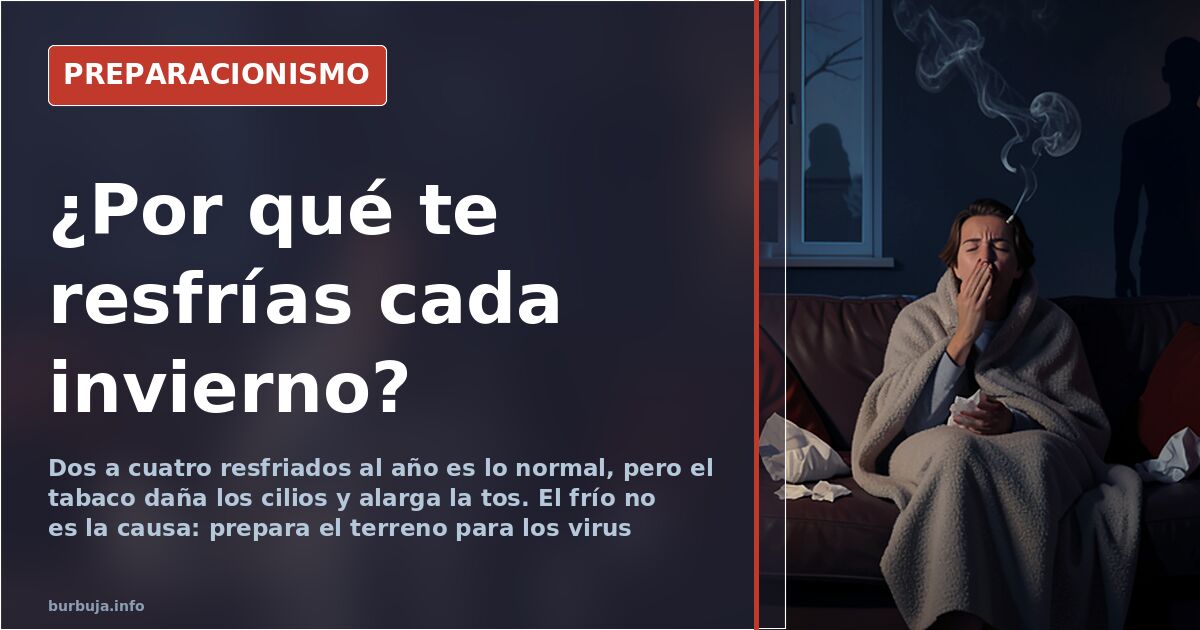
Two colds a year: normal, but smoking makes it worse
The cold arrives, and so does the congestion. A healthy adult experiences between two and four colds annually, so those who think they are suffering from a personal epidemic should calm down. However, if this pattern repeats every autumn with clockwork precision, it raises questions. Why do some people struggle significantly with the first sudden temperature drop, while others barely notice?
This discussion starts with a specific case: a slim smoker living in northern Spain, who has noticed more frequent colds since outdoor smoking became common. Their theory is that cold weather is the main cause of colds and that the body defends itself as best it can. The conversation quickly shifted to the factors that truly make a difference.
Smoking: the factor almost no one disputes
Among all mentioned elements, cigarettes fare the worst. Smoke damages the cilia, the structures that sweep the respiratory tract, explaining why smokers catch colds more often and suffer longer-lasting coughs. There is a timing detail that fits: since smoking moved outdoors, people go back and forth between warmth and cold several times a day. Bicho cause colds, not temperatures, but dry cold air dries out the nose, leaving it less protected.
Why do colds coincide with winter?
The short answer is that in winter we spend more time indoors with poor ventilation, creating an ideal ecosystem for transmission. The longer answer involves nasal mucosa: cold, dry air irritates it and reduces its barrier function. Some argue that a cold nose defends poorly, and this intuition is not far off. Cold isn't the culprit, but it is the accomplice that sets the stage.
Sleep, diet, and vitamin D: what remains unproven
Sleep, mood, and nutrition appear in the conversation as usual suspects. Personal experience suggests that poor rest precedes many colds, although the evidence here is more common sense than laboratory data. Vitamin D enters the list due to recent supplementation trends and low sun exposure. And there is a domestic confession repeated in many homes: honey only appears when it is too late.
Cold showers and other boasts
There is always the 'kitchen table' remedy: ice-cold water all year round, suitable only for real men. The irony speaks for itself. Also appearing is the debate on whether colds are caused by unseen microbes or simply cooling down, arguing that language gives it away: *resfriado*, *to get a cold*, *prendre froid*. The name is not etiological proof, though the linguistic detail deserves a moment's attention.
The prediction, with reservations: as long as cigarettes remain lit, winter will continue to exact a toll in tissues.
Also available in: Deutsch
Summary of a discussion on Burbuja.info - Foro de economía, actualidad y política., translated from Spanish and reviewed before publication. Read the full discussion (26 replies).
More summaries
-
Eating canned fish every day: mercury, salt and vitamin C
Eating canned fish daily: mercury can be avoided with small fish, but the salt, the lack of vitamin C and the can itself raise questions.
-
Spain Elevator Law Doesn't Mandate UPS Rescue During Blackouts
Spanish regulations require elevator rescue access, not automatic floor arrival during power cuts. Some estimate a 5,000 euro cost per unit for backup systems.
-
Spain's heat pumps: €2,300 vs €15,000 quotes
In Spain, a heat pump with radiators costs €2,300 versus €15,000 for underfloor heating. This gap drastically changes the payback period.
-
Spain's shortage kit: which meds to stock and which expire
In Spain, aspirin, paracetamol and ibuprofene form the core of a shortage kit; prescription drugs and expiry dates complicate any hoarding plan.
-
Home Canning Safety: Botulism Risks Spark Debate in Spain
A Spanish influencer's home canning video triggers safety concerns over jar sterilization and botulism risks.
-
Spain's gun laws ban these weapons, from Terminator pistol to .50 BMG
Spanish regulations prohibit firearms like the AMT Hardballer and .50 BMG rifles, though many owners are deterred by bureaucracy rather than bans.