
CNIO Director Blasco Charged with Embezzlement
María Blasco, head of Spain's CNIO cancer research center, faces fraud and embezzlement charges just before her dismissal.
English · Original discussion in Spanish · Published
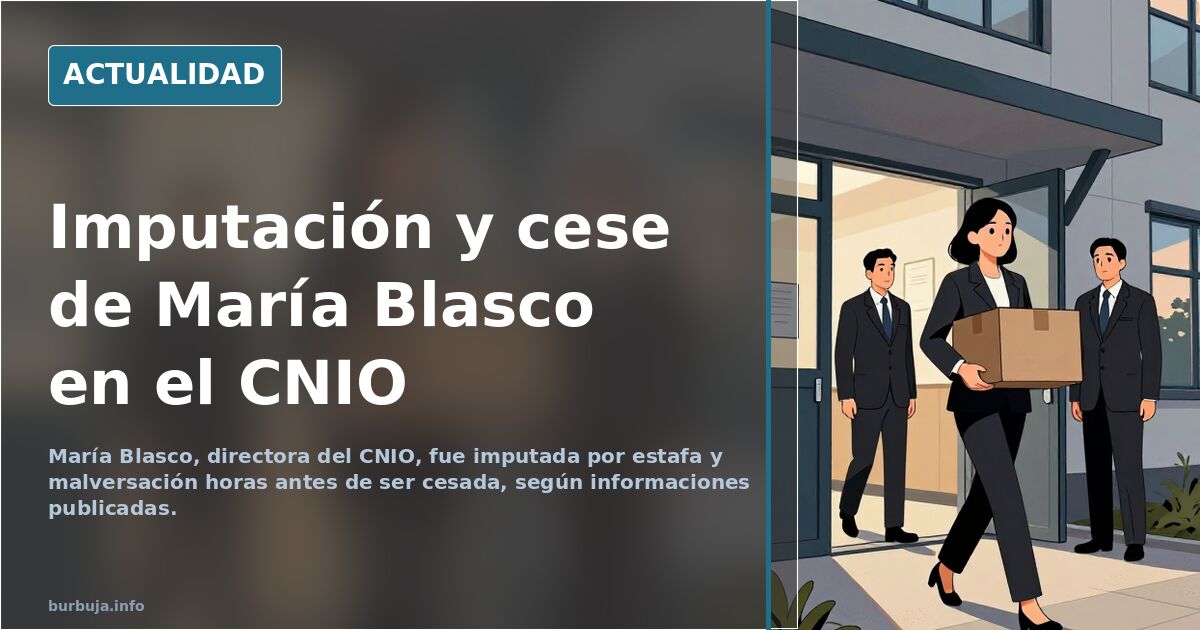
María Blasco: Charges and Dismissal at the CNIO
María Blasco, director of the National Cancer Research Center (CNIO), has been dismissed after a judge charged her with fraud and embezzlement, according to published reports. The agency falls under the Ministry of Science, Innovation and Universities. As reported in the initial discussion thread, Blasco allegedly diverted two million euros to buy paintings and sculptures while researchers demanded more funding for cancer studies. Additionally, a cited tweet claims she received €319,000 in extra pay since 2016.
The case erupts during a delicate moment for Spanish public science. The CNIO is the spearhead of oncological research in Spain, and its director has been under scrutiny for days. The lingering question is not just how much was spent, but why no one stopped it earlier.
What are María Blasco charged with?
A judge has charged Blasco with fraud and embezzlement hours before her dismissal, according to reports. She must explain the diversion of funds for art purchases and the receipt of extra salary. A charge does not equal conviction, but it marks a turning point in the center's management.
The initial trigger was the inclusion of an animal welfare foundation demanding restrictions on animal testing in a €2.4 million program. Ruth Toledano, Blasco’s partner, frequently collaborates with this entity. This link, combined with the fund diversion for art, set off all alarms.
Extra Pay and Travel Expenses
The figure of €319,000 in extra pay since 2016 is the most widely circulated, according to a cited tweet. This is not a minor expense in an agency dependent on public funds that competes for every euro destined for research. Some argue these trips were necessary for the center's international projection; however, critics contend that extra pay cannot be justified by conferences alone.
The full calculation, broken down item by item, reveals a surprising discrepancy. The leaked figures paint a spending pattern that hardly fits the austerity demanded of research groups seeking public funding.
Art, Funds, and Cancer Research
The diversion of two million euros for paintings and sculptures is perhaps the hardest episode to digest. While doctors requested more funds for cancer research, the center's leadership spent money on decoration. The contradiction is so evident that even defenders of Blasco's management have not fully attempted to justify it.
One line of analysis suggests such cases are not exceptional in Spanish public science. It is argued that corruption among scientists is more common than admitted, that papers are published to justify grants, and that the real goal is to grab cash. This is a heavy accusation, undoubtedly, but it forms part of the climate generated by this scandal.
Political Reaction: Sarracena and the Dismissal
Diana Sarracena, Minister of Science, Innovation and Universities, was very busy and saw no reason to dismiss Blasco, according to published information. Finally, the dismissal came after the judicial charge. The Government has avoided making strong statements about the substance of the matter.
The opposition and much of public opinion agree on one thing: these types of corruption cases must end up in court, regardless of who is responsible. Institutional slowness in reacting fuels the feeling that rules are not equal for everyone.
What Happens Now with the CNIO?
The CNIO is left in an interim situation. The charging of its director with fraud and embezzlement opens a judicial process that could last years. Meanwhile, the center continues operating with public funds and under the shadow of suspicion regarding its management.
The case leaves an uncomfortable question: if the diversion of funds for art and extra pay were known internally, why did no one report it sooner? The answer likely relates to the power structure within public research agencies, where leadership concentrates power difficult to counteract.
With these numbers on the table, Spanish public science faces a credibility crisis that will not be resolved by a dismissal alone. The data is there. The explanations remain pending.
María Blasco, director of the National Cancer Research Center (CNIO), has been dismissed after a judge charged her with fraud and embezzlement, according to published reports. The agency falls under the Ministry of Science, Innovation and Universities. As reported in the initial discussion thread, Blasco allegedly diverted two million euros to buy paintings and sculptures while researchers demanded more funding for cancer studies. Additionally, a cited tweet claims she received €319,000 in extra pay since 2016.
The case erupts during a delicate moment for Spanish public science. The CNIO is the spearhead of oncological research in Spain, and its director has been under scrutiny for days. The lingering question is not just how much was spent, but why no one stopped it earlier.
What are María Blasco charged with?
A judge has charged Blasco with fraud and embezzlement hours before her dismissal, according to reports. She must explain the diversion of funds for art purchases and the receipt of extra salary. A charge does not equal conviction, but it marks a turning point in the center's management.
The initial trigger was the inclusion of an animal welfare foundation demanding restrictions on animal testing in a €2.4 million program. Ruth Toledano, Blasco’s partner, frequently collaborates with this entity. This link, combined with the fund diversion for art, set off all alarms.
Extra Pay and Travel Expenses
The figure of €319,000 in extra pay since 2016 is the most widely circulated, according to a cited tweet. This is not a minor expense in an agency dependent on public funds that competes for every euro destined for research. Some argue these trips were necessary for the center's international projection; however, critics contend that extra pay cannot be justified by conferences alone.
The full calculation, broken down item by item, reveals a surprising discrepancy. The leaked figures paint a spending pattern that hardly fits the austerity demanded of research groups seeking public funding.
Art, Funds, and Cancer Research
The diversion of two million euros for paintings and sculptures is perhaps the hardest episode to digest. While doctors requested more funds for cancer research, the center's leadership spent money on decoration. The contradiction is so evident that even defenders of Blasco's management have not fully attempted to justify it.
One line of analysis suggests such cases are not exceptional in Spanish public science. It is argued that corruption among scientists is more common than admitted, that papers are published to justify grants, and that the real goal is to grab cash. This is a heavy accusation, undoubtedly, but it forms part of the climate generated by this scandal.
Political Reaction: Sarracena and the Dismissal
Diana Sarracena, Minister of Science, Innovation and Universities, was very busy and saw no reason to dismiss Blasco, according to published information. Finally, the dismissal came after the judicial charge. The Government has avoided making strong statements about the substance of the matter.
The opposition and much of public opinion agree on one thing: these types of corruption cases must end up in court, regardless of who is responsible. Institutional slowness in reacting fuels the feeling that rules are not equal for everyone.
What Happens Now with the CNIO?
The CNIO is left in an interim situation. The charging of its director with fraud and embezzlement opens a judicial process that could last years. Meanwhile, the center continues operating with public funds and under the shadow of suspicion regarding its management.
The case leaves an uncomfortable question: if the diversion of funds for art and extra pay were known internally, why did no one report it sooner? The answer likely relates to the power structure within public research agencies, where leadership concentrates power difficult to counteract.
With these numbers on the table, Spanish public science faces a credibility crisis that will not be resolved by a dismissal alone. The data is there. The explanations remain pending.
Summary of a discussion on Burbuja.info - Foro de economía, actualidad y política., translated from Spanish and reviewed before publication. Read the full discussion (144 replies).
More summaries
-
[ACTIVISME ANTIFA][FIRST DATES]Conscious proletarian ally rejects provocative fascist carrying the bracelet of discord and hatred. +HD
A man rejects his date because she is wearing a bracelet of Spain, labeling it a "red flag." The incident goes viral on social media.
-
Darwinism: The Myth of Chance That Science Cannot Close
Darwinism is criticized for relying on a chance incapable of accumulating changes. Irreducible complexity and a return to St. Augustine's ideas reopen the debate.
-
Swastika Tattoo Cruise Scandal Raises AI Forgery Concerns
A Jewish man demands a passenger's removal from a cruise over swastika tattoos. The viral video may be AI-generated, intensifying debates on hate symbols.
-
Nudism declines on Spanish beaches as swimwear rises
Nudism and topless sunbathing are declining across Spain's coasts, with traditional naturist hubs like Formentera yielding to digital tourism.
-
Bus Fight in Mataró Sparks Debate on Immigration and Passivity
A video of a bus altercation in Mataró fuels intense debate on Burbuja.info regarding immigration, cowardice, and passenger reactions.
-
Is Sex Disappearing from Society?
Burbuja.info analyzes if sex is vanishing: the clash between digital hypersexualization and the reality of scarce physical contact.