
Bitcoin surges 50% in nine months, utility debate persists
Bitcoin gains over 50% in nine months yet remains unusable for daily purchases, leaving the controversy over its practical value unresolved.
English · Original discussion in Spanish · Published
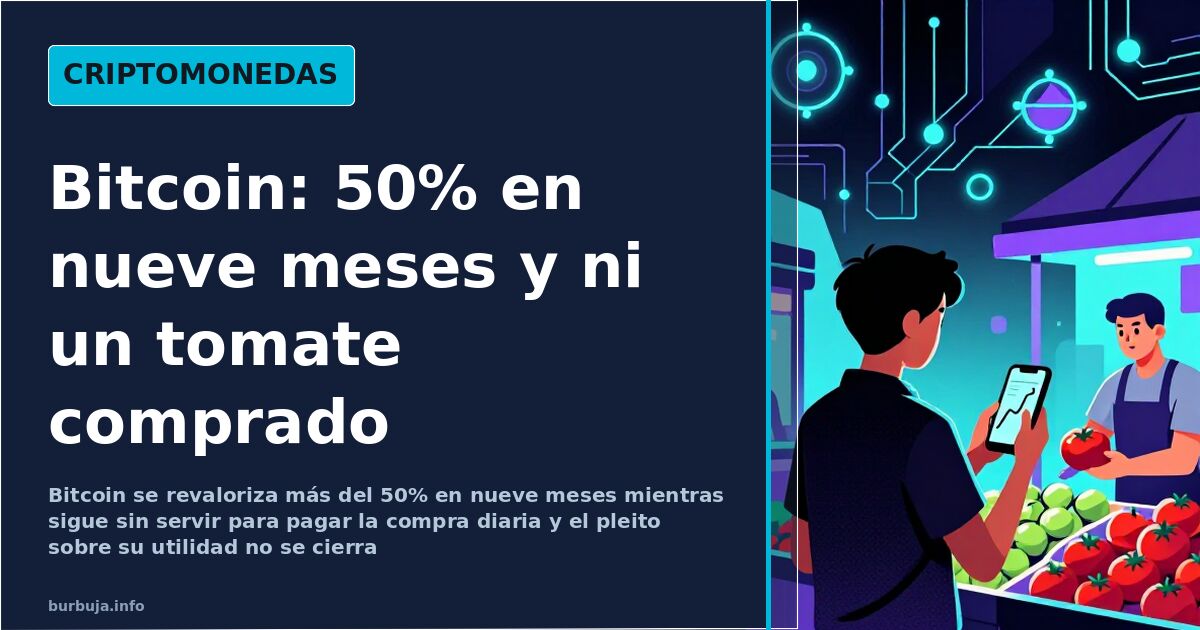
Bitcoin rises 50%, but you still can’t buy tomatoes with it
What is a Bitcoin worth if no one has sold it? This question lies at the heart of an ongoing debate that once predicted holders would end up in poorhouses and compared the cryptocurrency to Gowex, Terra, and Dutch tulips. The current picture painted by forum posts is different: a rise of over 50% in just over nine months, according to one participant, claims of multiplied portfolios, and no verified grocery purchases made with digital currency. The original headline aged poorly; the core argument did not.
How much money has actually been made with Bitcoin?
One user presents a hypothetical involving two retirees. One invests €20,000 in bonds, earning roughly €600 pre-tax upon maturity. The other puts the same amount into Bitcoin and, at current prices, would have €40,000 more if they sold. This massive gap underpins the bullish case: there is no reason to believe market sales haven’t occurred.
The counterargument is old accounting logic: until converted to cash, there is no realized profit. A holder claiming to have bought at €50,000 and also at €500—without breaking down the average—cites a €14,000 loss as their benchmark. Within the same message, windfalls and losses coexist. The complete line-by-line spreadsheet promised in such debates is rarely published in full.
Is Bitcoin an investment or pure speculation?
There is no consensus here, and likely never will be. One camp argues its current utility is as a store of value: limited supply, predictable issuance schedule, and immunity from central bank printing presses. Comparisons to gold and real estate recur frequently. If no one complains about rising apartment values, why object to digital asset appreciation?
The rebuttal focuses on usability. An asset that only serves to wait for someone else to pay more isn’t an investment; it’s a seat at an auction. A key distinction often raised: stocks and rentals generate monthly dividends and income; Bitcoin generates nothing until sale.
Can you buy a kilo of tomatoes with Bitcoin?
Technically yes, practically it’s barter with fees. The strongest enduring argument is the grocery basket test: supermarkets don’t accept Bitcoin at tomato prices. When intermediaries like card processors are involved, someone pays the fee, and merchants only absorb it if it’s standard practice. Claims that daily crypto payments occur elsewhere exist, portraying Spain as an outlier due to lack of awareness and habit.
The data point that confuses both sides
Neither those predicting collapse nor those promising millions have been proven right yet. The price has risen enough to silence some critics but remains too far from everyday use to disarm skeptics. A third group stays out of the trenches: those who accumulate without selling, arguing they’d only speculate if they sold. Their position is comfortable but unprovable: without a transaction, there is neither merit nor ruin.
Underlying everything is the thread’s final exchange: some argue that if the internet went down tomorrow, gold and cash wouldn’t be worth much either, and antibiotics stored in a drawer might be more valuable than both. The decade’s great economic debate ultimately resolves with the shopkeeper’s question: Will you pay in cash?
What is a Bitcoin worth if no one has sold it? This question lies at the heart of an ongoing debate that once predicted holders would end up in poorhouses and compared the cryptocurrency to Gowex, Terra, and Dutch tulips. The current picture painted by forum posts is different: a rise of over 50% in just over nine months, according to one participant, claims of multiplied portfolios, and no verified grocery purchases made with digital currency. The original headline aged poorly; the core argument did not.
How much money has actually been made with Bitcoin?
One user presents a hypothetical involving two retirees. One invests €20,000 in bonds, earning roughly €600 pre-tax upon maturity. The other puts the same amount into Bitcoin and, at current prices, would have €40,000 more if they sold. This massive gap underpins the bullish case: there is no reason to believe market sales haven’t occurred.
The counterargument is old accounting logic: until converted to cash, there is no realized profit. A holder claiming to have bought at €50,000 and also at €500—without breaking down the average—cites a €14,000 loss as their benchmark. Within the same message, windfalls and losses coexist. The complete line-by-line spreadsheet promised in such debates is rarely published in full.
Is Bitcoin an investment or pure speculation?
There is no consensus here, and likely never will be. One camp argues its current utility is as a store of value: limited supply, predictable issuance schedule, and immunity from central bank printing presses. Comparisons to gold and real estate recur frequently. If no one complains about rising apartment values, why object to digital asset appreciation?
The rebuttal focuses on usability. An asset that only serves to wait for someone else to pay more isn’t an investment; it’s a seat at an auction. A key distinction often raised: stocks and rentals generate monthly dividends and income; Bitcoin generates nothing until sale.
Can you buy a kilo of tomatoes with Bitcoin?
Technically yes, practically it’s barter with fees. The strongest enduring argument is the grocery basket test: supermarkets don’t accept Bitcoin at tomato prices. When intermediaries like card processors are involved, someone pays the fee, and merchants only absorb it if it’s standard practice. Claims that daily crypto payments occur elsewhere exist, portraying Spain as an outlier due to lack of awareness and habit.
The data point that confuses both sides
Neither those predicting collapse nor those promising millions have been proven right yet. The price has risen enough to silence some critics but remains too far from everyday use to disarm skeptics. A third group stays out of the trenches: those who accumulate without selling, arguing they’d only speculate if they sold. Their position is comfortable but unprovable: without a transaction, there is neither merit nor ruin.
Underlying everything is the thread’s final exchange: some argue that if the internet went down tomorrow, gold and cash wouldn’t be worth much either, and antibiotics stored in a drawer might be more valuable than both. The decade’s great economic debate ultimately resolves with the shopkeeper’s question: Will you pay in cash?
Summary of a discussion on Burbuja.info - Foro de economía, actualidad y política., translated from Spanish and reviewed before publication. Read the full discussion (179 replies).
More summaries
-
Bitcoin Surges Past $70,000: BlackRock ETF and Skeptics Prepare for Historic Shock
Bitcoin jumps from $16,000 to $70,000: BlackRock's ETF, Tether issuance, and bull-bear debate anticipate a historic movement.
-
Valdeande Mágico: The YouTuber Who Bought Bitcoin at $20
He recommended Bitcoin at $20 and Ethereum at $1. Today Valdeande Mágico posts on private channels and awaits 200 bitcoin lost in Mt. Gox.
-
Spanish saver loses home down payment to memecoins
Four years of savings for a Spanish apartment down payment vanished in crypto crashes, leaving the investor with heavy Binance charges and sleepless nights.
-
Florida trial may reveal Bitcoin creator Satoshi Nakamoto's identity
A Florida lawsuit over a $64 billion bitcoin reserve could uncover the true identity of Satoshi Nakamoto.
-
Iturralde's decade-long warnings on Bitcoin crash
Alberto Iturralde has warned for ten years that Bitcoin will drop to zero, while gold rises 82% against Bitcoin's 155%, with no date set for the bubble burst.
-
RollerCoin: Earn Crypto Mining BTC, ETH or Doge via Retro Games
RollerCoin pays satoshis for playing 8-bit games: up to 20 every five minutes in the best case and, according to a circulating calculation, 17 years to recoup investment.