
Biomass and pellets: the calculation being debated in the forum
Pellets at €0.23/kg would work out at €0.06 per kWh, but forum users are debating burner consumption, moisture and transport compared with heating oil and heat pumps
English · Original discussion in Spanish · Published
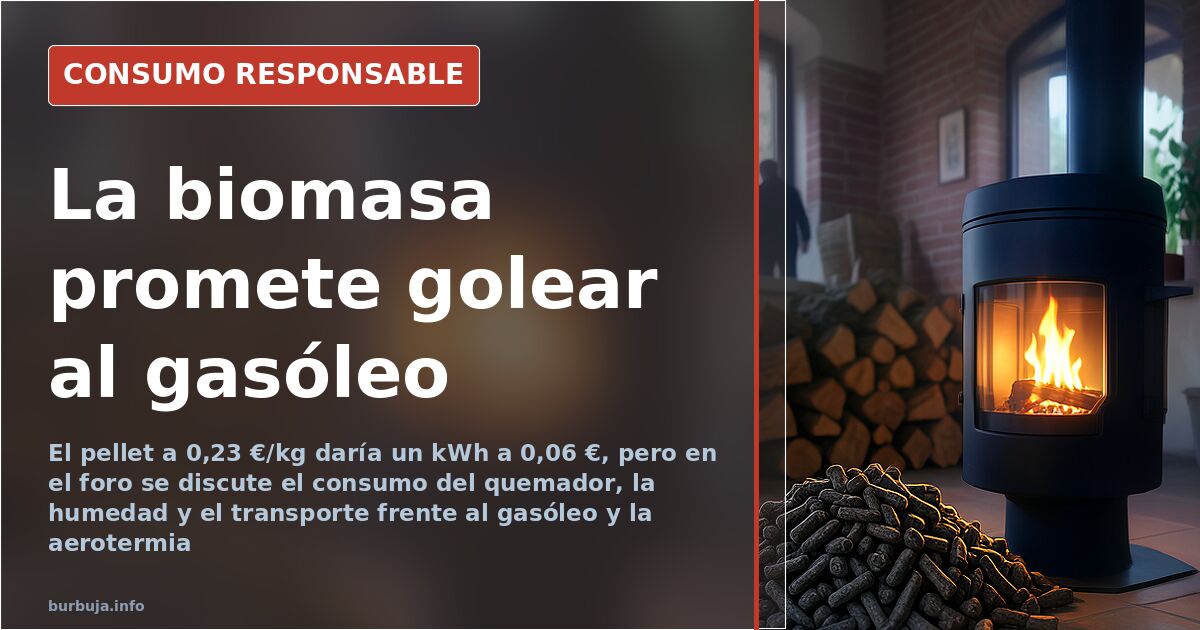
Biomass vs heating oil: the savings are real, but not the ones you're sold
A kilogram of pellets at €0.23 and a boiler with 90% efficiency are enough to bring the cost per kilowatt hour down to six cents, according to a calculation circulating in the debate. Against €0.10 for heating oil or €0.11 for butane, the conclusion seems obvious: biomass wins hands down. The problem comes when you factor in the burner's electricity consumption, the fuel's actual moisture content and the price of the bag at the corner hardware store. That's where the rosy picture starts to unravel, according to participants who question those figures.
What heating with pellets really costs
The most optimistic calculation starts with premium-grade pellets, with a calorific value of 4,700 kcal per kilo and zero moisture. With those assumptions, and 90% efficiency, the kilowatt hour comes out at around €0.06. The pessimistic review lowers the calorific value to 4,200 kcal, applies 5% moisture and adds the 150 watts consumed by the burner: the result comes closer to €0.062, and that's without counting transport or installation.
The range matters because the savings are calculated over thousands of kilowatts a year. For a typical home requiring 13,000 kWh annually, heating oil comes to €1,300 and butane to €1,430, according to the prices used in the comparison. Biomass would indeed come in below that, but the gap depends on a handful of variables nobody fully controls.
Supply isn't always where it's needed
The most frequent criticism isn't aimed at the current price, but at what will happen when demand grows. Biomass is cheap while it's scarce. In olive-growing areas, olive pits were an industrial fuel before private households arrived; when the harvest fails, the price doubles and the product disappears. The experience of natural gas serves as a warning: decades ago it was dirt cheap compared with butane, and we all know how that ended.
Spain produces only 29% of the biomass it could generate, compared with a European average of 69%, according to the figures cited. The potential exists. The logistics, storage and dependence on a local supplier are another matter.
The alternative gaining ground: heat pumps
Against pellets, a heat pump with a COP of 4 brings the kilowatt hour down to around €0.05, with no bags to haul or ash to clean. Those on a night tariff can store heat at half the consumption. Butane gas keeps its niche in second homes and occasional heating, where there's no fixed contract and a heater costs €126.
The wood-burning boiler, with a tonne of oak at €70 and your own chainsaw, remains the cheapest option for those with space and muscle. The problem is the usual one: time and your back.
Is it worth replacing the boiler, or better to wait for the market to mature?
Summary of a discussion on Burbuja.info - Foro de economía, actualidad y política., translated from Spanish and reviewed before publication. Read the full discussion (32 replies).
More summaries
-
Heating oil vs natural gas: which boiler saves more?
Real comparison of heating oil and natural gas boilers: cost per kWh, efficiency, maintenance, and alternatives like pellets or heat pumps.
-
Boiler maintenance: is €100 a year worth it?
A boiler maintenance contract costs around €100 a year. Forum users say the mandatory inspection and breakdown risk determine whether it's worth it.
-
Propane vs natural gas: which one is really cheaper?
Propane vs natural gas: is bottled gas really cheaper? We break down costs, logistics and the impact of the fixed standing charge.
-
EU's €3 parcel levy ends AliExpress's cheap era
The EU's €3 per category fee sends AliExpress prices soaring: a €3 order now costs €11. The Chinese parcel model faces collapse.
-
Private healthcare in Spain: health insurance prices up 67%
Health insurance prices in Spain have soared 67% since the pandemic. We look at the causes, the double bill paid by policyholders and what lies ahead.
-
Which AI is best: free for everyday use, paid for coding
Manually entering a thousand records used to take two and a half hours; AI does it in five minutes. No single model wins at everything: the right choice depends on how you use it.