
Barcelona Metro Fight: Transphobic Attack or Brawl?
A trans woman was assaulted on Barcelona's L1 metro line. The OCH denounces extreme violence, but the circulating video starts mid-fight.
English · Original discussion in Spanish · Published
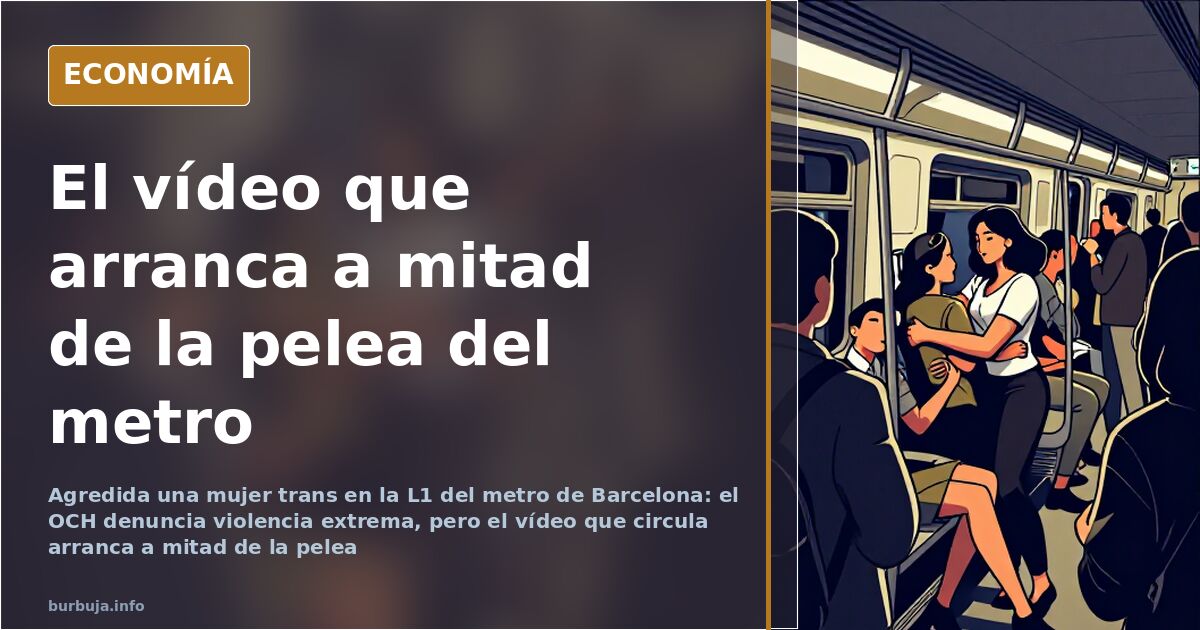
Barcelona Metro: The Video That Starts When the Fight Is Already Raging
What peine before someone pulled out their phone? That's the question hanging over the case of the fight recorded on a carriage of Line 1 – the red one – of the Barcelona metro, around 9 PM on a Saturday. At the center of the scene, an assaulted trans woman and a passenger who ended up exchanging blows with her. The Observatory Against Homophobia (OCH) reported it as an episode of extreme and transphobic violence, after the aggressor allegedly told her, according to disseminated testimonies, "Behave yourself" and threatened her with death, making a derogatory remark about her wig.
What's circulating, however, is a fragment. A video that starts when the scuffle had already been going on for seconds and has become the battleground for two incompatible narratives.
What is known about the altercation on Line 1?
The confirmed facts are scarce and arrived bit by bit. The assault occurred on an L1 train, which crosses Barcelona from end to end. Several witnesses have maintained on television – including the program Código 10 on Cuatro – that the trans person entered the carriage shouting and that the other passenger reprimanded their behavior before everything got out of control.
The OCH immediately raised the alarm: they spoke of extreme violence and an attack with a transphobic charge. The most widely disseminated version by the media emphasized that a man had thrown "multiple punches and kicks" at a trans woman.
The Missing Detail: No One Has the Beginning of the Video
Here's the problem. The known images start in the middle of the fight. There is no public record of the preceding seconds. Was it an unprovoked assault or a dispute that escalated? The question is not rhetorical: it conditions whether we are talking about a hate crime, a mutual brawl, or both at once. Everyone chooses their own beginning.
This lack of context has fueled suspicion that the narrative was constructed before the sequence was known. The aggressor appears, according to some comments, with his face pixelated on television, and his background is barely mentioned; the victim, on the other hand, has been described in full detail. For a portion of the public, this imbalance is the real news, and the original material of this matter accumulates testimonies that go far beyond what can fit into four lines.
From Punches to Focus: Trans Attack or Fight Between Two
The case was framed almost immediately under the label of a transphobic assault. The coverage also coincided with the dates leading up to Pride celebrations, a detail that did not go unnoticed among those who suspect a media agenda. On the other hand, another argument: the LGBTQI+ community suffers aggressions recurrently, and minimizing them is the real problem, not reporting them excessively.
The underlying issue is always the same. Who deserves the label of victim and who decides the framework. A metro carriage can hold two people and, apparently, several narratives.
Transport Security and the Underlying Discontent
Behind the case lies a more uncomfortable issue: perceived security on public transport. Part of the debate turns these episodes into ammunition for the immigration discourse, with arguments that mix isolated anecdotes.
It's worth remembering that intervening in someone else's fight has a cost. Passengers who watch – or record – end up being singled out, and those who mediate can end up with a complaint against them for defending someone who, depending on the moment, perhaps no longer deserved it.
In the end, the only firm thing is this: the video starts late, the narrative started early, and the rest will be written by whoever always writes it.
What peine before someone pulled out their phone? That's the question hanging over the case of the fight recorded on a carriage of Line 1 – the red one – of the Barcelona metro, around 9 PM on a Saturday. At the center of the scene, an assaulted trans woman and a passenger who ended up exchanging blows with her. The Observatory Against Homophobia (OCH) reported it as an episode of extreme and transphobic violence, after the aggressor allegedly told her, according to disseminated testimonies, "Behave yourself" and threatened her with death, making a derogatory remark about her wig.
What's circulating, however, is a fragment. A video that starts when the scuffle had already been going on for seconds and has become the battleground for two incompatible narratives.
What is known about the altercation on Line 1?
The confirmed facts are scarce and arrived bit by bit. The assault occurred on an L1 train, which crosses Barcelona from end to end. Several witnesses have maintained on television – including the program Código 10 on Cuatro – that the trans person entered the carriage shouting and that the other passenger reprimanded their behavior before everything got out of control.
The OCH immediately raised the alarm: they spoke of extreme violence and an attack with a transphobic charge. The most widely disseminated version by the media emphasized that a man had thrown "multiple punches and kicks" at a trans woman.
The Missing Detail: No One Has the Beginning of the Video
Here's the problem. The known images start in the middle of the fight. There is no public record of the preceding seconds. Was it an unprovoked assault or a dispute that escalated? The question is not rhetorical: it conditions whether we are talking about a hate crime, a mutual brawl, or both at once. Everyone chooses their own beginning.
This lack of context has fueled suspicion that the narrative was constructed before the sequence was known. The aggressor appears, according to some comments, with his face pixelated on television, and his background is barely mentioned; the victim, on the other hand, has been described in full detail. For a portion of the public, this imbalance is the real news, and the original material of this matter accumulates testimonies that go far beyond what can fit into four lines.
From Punches to Focus: Trans Attack or Fight Between Two
The case was framed almost immediately under the label of a transphobic assault. The coverage also coincided with the dates leading up to Pride celebrations, a detail that did not go unnoticed among those who suspect a media agenda. On the other hand, another argument: the LGBTQI+ community suffers aggressions recurrently, and minimizing them is the real problem, not reporting them excessively.
The underlying issue is always the same. Who deserves the label of victim and who decides the framework. A metro carriage can hold two people and, apparently, several narratives.
Transport Security and the Underlying Discontent
Behind the case lies a more uncomfortable issue: perceived security on public transport. Part of the debate turns these episodes into ammunition for the immigration discourse, with arguments that mix isolated anecdotes.
It's worth remembering that intervening in someone else's fight has a cost. Passengers who watch – or record – end up being singled out, and those who mediate can end up with a complaint against them for defending someone who, depending on the moment, perhaps no longer deserved it.
In the end, the only firm thing is this: the video starts late, the narrative started early, and the rest will be written by whoever always writes it.
Summary of a discussion on Burbuja.info - Foro de economía, actualidad y política., translated from Spanish and reviewed before publication. Read the full discussion (216 replies).
More summaries
-
Barcelona in turmoil. Tourist sprays suspected pickpockets on the metro
A tourist sprayed pickpockets on the Barcelona metro, an act causing debate about safety and tourism.
-
Euribor rises to 3.374% while September average nears 3.2%
Euribor rises by 0.048% to 3.374%, while the September average hits 3.166% versus last year's 2.172%. The variables are under scrutiny.
-
Euthanasia in Old Age: Autonomy vs. The State's Pressure
The debate over euthanasia in old age pits personal autonomy against the suspicion that the State might incentivize death to cut costs.
-
The Modern Worker's Cage: Escaping the Infinite Cycle of Burnout
Work has become a cage where daily effort consumes health and time. Discover why we push ourselves so hard and how to break the cycle.
-
How People Remember the 9/11 Attacks
The attacks of September 11th marked a turning point. Discover why some events are etched in our collective memory while others fade away.
-
Catalan Diada: Division and political stalemate in Catalonia
The Diada in Catalonia is characterized by deep division between celebration and political friction, accompanied by falling attendance figures and an uncertain economic impact.