
Arganzuela Demands Solutions Amidst Rising Homelessness
Arganzuela residents call for action as homelessness increases, fueled by high rents and migration.
English · Original discussion in Spanish · Published
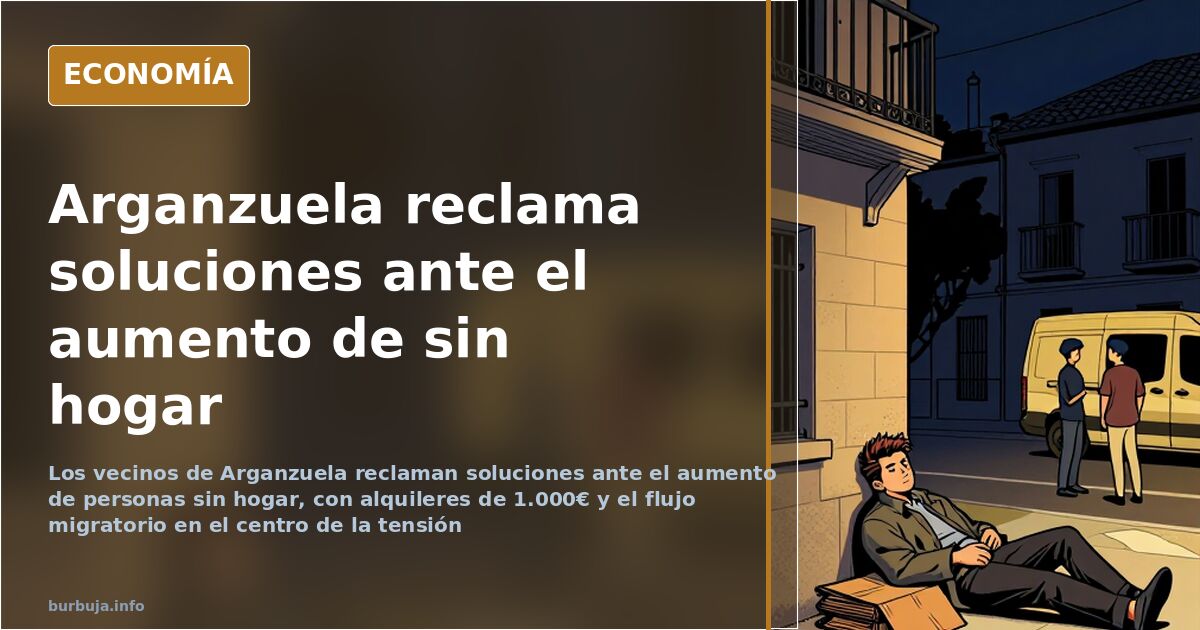
Arganzuela Overwhelmed: More People Sleeping on the Streets
Residents of Madrid's Arganzuela district have moved from complaining to demanding solutions. They seek answers to the increase in homeless people sleeping on their streets, a scene captured by Telemadrid that has reignited an uncomfortable tension where housing, prices, and immigration policy intersect. In a city with sky-high rents, every bench occupied for hours ceases to be an anecdote and becomes a symptom.
The Recurring Diagnosis: Rent, Salaries, and Arrivals
The most common narrative mixes three elements. The first is the price: rent in the area, according to discussions, is around 1,000 euros, consuming any single-income salary. The second is the volume of arrivals: some estimate the annual flow at half a million people, a number circulated without official sources, while others boldly claim double or more. The third is the feeling that the administration is overwhelmed.
None of this makes the figures factual. These are circulating estimates, not certified statistics, and should be treated as what they are: the background noise of real discontent.
Why Entire Families Are Sitting on Benches
One of the most repeated theories describes families renting a single room among several people, sharing sleeping time in shifts, so each group sleeps for a few hours before leaving the room to the next. The visible result is people spending the day on the street, with nowhere to go. "It's common to see entire newly arrived families on the street, spending the day sitting on a bench watching the hours go by," summarizes a circulating description.
The mechanism aligns with the arithmetic of room rentals. But it is, again, an observed pattern, not a census. No one has counted how many people live this way in the district.
Gasoline at Two Euros and the Cost That Creeps Into Everything
The anger isn't limited to housing. The price of gasoline, which according to circulating references is around two euros per liter, enters the list of complaints as a reminder that living in the city is becoming more expensive on multiple fronts simultaneously. When fuel and rent move together, any extra expense—a bill, a breakdown, a move—can destabilize the entire month.
Where the Discussion Gets Stuck
Here the analysis halts. Some point to immigration policy and the volume of arrivals; others, to the rental market and insufficient public housing. Both diagnoses compete without either being verifiable with available data. And in the meantime, the residents of Arganzuela continue to watch the hours pass on their neighborhood benches, waiting for a solution that no one has yet put on the table.
Residents of Madrid's Arganzuela district have moved from complaining to demanding solutions. They seek answers to the increase in homeless people sleeping on their streets, a scene captured by Telemadrid that has reignited an uncomfortable tension where housing, prices, and immigration policy intersect. In a city with sky-high rents, every bench occupied for hours ceases to be an anecdote and becomes a symptom.
The Recurring Diagnosis: Rent, Salaries, and Arrivals
The most common narrative mixes three elements. The first is the price: rent in the area, according to discussions, is around 1,000 euros, consuming any single-income salary. The second is the volume of arrivals: some estimate the annual flow at half a million people, a number circulated without official sources, while others boldly claim double or more. The third is the feeling that the administration is overwhelmed.
None of this makes the figures factual. These are circulating estimates, not certified statistics, and should be treated as what they are: the background noise of real discontent.
Why Entire Families Are Sitting on Benches
One of the most repeated theories describes families renting a single room among several people, sharing sleeping time in shifts, so each group sleeps for a few hours before leaving the room to the next. The visible result is people spending the day on the street, with nowhere to go. "It's common to see entire newly arrived families on the street, spending the day sitting on a bench watching the hours go by," summarizes a circulating description.
The mechanism aligns with the arithmetic of room rentals. But it is, again, an observed pattern, not a census. No one has counted how many people live this way in the district.
Gasoline at Two Euros and the Cost That Creeps Into Everything
The anger isn't limited to housing. The price of gasoline, which according to circulating references is around two euros per liter, enters the list of complaints as a reminder that living in the city is becoming more expensive on multiple fronts simultaneously. When fuel and rent move together, any extra expense—a bill, a breakdown, a move—can destabilize the entire month.
Where the Discussion Gets Stuck
Here the analysis halts. Some point to immigration policy and the volume of arrivals; others, to the rental market and insufficient public housing. Both diagnoses compete without either being verifiable with available data. And in the meantime, the residents of Arganzuela continue to watch the hours pass on their neighborhood benches, waiting for a solution that no one has yet put on the table.
Summary of a discussion on Burbuja.info - Foro de economía, actualidad y política., translated from Spanish and reviewed before publication. Read the full discussion (25 replies).
More summaries
-
Brookfield Pulls 5,300 Madrid Homes from Rental Market
Brookfield buys 5,300 Madrid apartments from Blackstone for €1.3 billion and will sell them individually, impacting the rental market.
-
Rental Market Tightens: 34% to Withdraw Properties
58% of landlords to raise rent upon renewal, 34% to remove properties from market, says Fotocasa. 37% of contracts expire within a year.
-
Euthanasia in Old Age: Autonomy vs. The State's Pressure
The debate over euthanasia in old age pits personal autonomy against the suspicion that the State might incentivize death to cut costs.
-
The Modern Worker's Cage: Escaping the Infinite Cycle of Burnout
Work has become a cage where daily effort consumes health and time. Discover why we push ourselves so hard and how to break the cycle.
-
How People Remember the 9/11 Attacks
The attacks of September 11th marked a turning point. Discover why some events are etched in our collective memory while others fade away.
-
Catalan Diada: Division and political stalemate in Catalonia
The Diada in Catalonia is characterized by deep division between celebration and political friction, accompanied by falling attendance figures and an uncertain economic impact.