
Android or Tizen: which system to choose for your next smart TV
Find out why Android is winning the smart TV battle, the complaints against Samsung's Tizen, and the alternative of a 30-euro TV box.
English · Original discussion in Spanish · Published
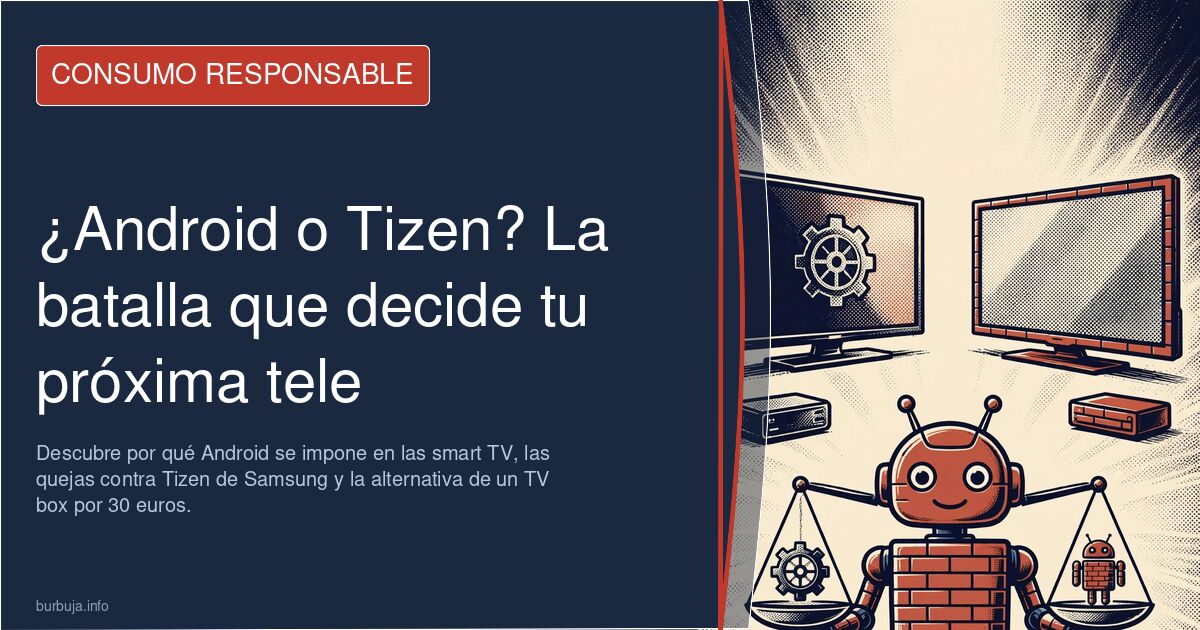
Smart TVs with Android: the operating system war that decides your purchase
Is it worth paying more for a smart TV with Android, or is it better to buy a cheap set and add a TV box? The question thousands of buyers ask has a more nuanced answer than it seems. While Samsung pushes its Tizen system with built-in advertising, Sony and Philips stay loyal to Android, and Chinese manufacturers like TCL or Hisense dominate the mid-range with aggressive prices.
Tizen, the system that angers its users
Complaints about Samsung's operating system keep coming up: ads on the home screen, no way to switch the TV off completely (standby only), a minimalist remote that forces you to click a dozen times for anything, and a video player that won't accept many formats. Add to that the remote's microphone and Bluetooth, which raise suspicions among the more sceptical. In short, the user experience leaves a lot to be desired for a product that isn't cheap.
Android as the de facto standard
The alternative gaining trinc is Android TV. It lets you download thousands of apps, install Kodi and customise the experience. Brands like Sony and Philips integrate it into their televisions, and users praise the picture quality of the high-end models. That said, some point out that Android works only as long as Google wants it to, and that a cheap TV box can be the solution when the system becomes obsolete.
The TV box alternative: 30 euros that change everything
One school of thought advocates buying a "bare" television and adding a TV box for just over 30 euros. The advantage: it isn't restricted when it comes to apps, you install and uninstall whatever you want, and Kodi on a TV box is far more powerful than on built-in Android. It even lets you emulate games up to PlayStation 1. The downside: yet another device in the living room and an extra remote.
Picture quality vs price: the other battle
It's not all about software. Picture quality remains the decisive factor for many. A high-end Sony with Android offers an incredible picture, but it costs. A 55-inch TCL QLED for 400 euros may be enough for average use, though purists insist the blacks aren't black. The value for money of Chinese brands is eating into the market share of the Korean ones, which outsource panel manufacturing to third parties.
In the end, the decision isn't just about the operating system: it's about how much you're willing to pay for a picture that won't disappoint you and software that doesn't treat you like a fool. And if the TV becomes a monitor connected to a PC, maybe the question was a different one.
Also available in: Deutsch
Summary of a discussion on Burbuja.info - Foro de economía, actualidad y política., translated from Spanish and reviewed before publication. Read the full discussion (37 replies).
More summaries
-
Broken smart TV: repair or buy new after an accidental knock
A knock from a sofa bed leaves a Samsung TV beyond repair. Fixing it costs more than buying new: World Cup deals start at €200. Home insurance won't cover it.
-
Mixed changing rooms in gyms: what we know and what we don't
Several users claim that a mixed changing room is the area with lockers and benches, while changing and showering take place in individual cubicles.
-
Local AI: its moment has arrived, but not for everyone
A local Qwen model runs at 140 tokens per second, yet a simple subtraction took 5 minutes. Is local AI worth it, or does the cloud win?
-
Hoarding hardware against the cloud: smart move or money pit?
A second-hand ThinkPad for 200 euros outperforms a pile of old hardware. The anti-silicon strategy put to the test.
-
Is the end near for Spain's avant-garde cuisine?
Author-driven cuisine under fire: passing fad or bubble? The debate between foams and stews is heating up Spain's restaurant scene.
-
Blue-light photophobia: private appointment not until November 5
A patient with photophobia to blue light faces long waits: private healthcare in Madrid offers October 15 and November 5, according to the account.