
Ageism in Spain: Civil Service Exams as Last Resort
In Spain, turning 40 with limited experience blocks private sector entry, making civil service exams the only age-neutral refuge.
English · Original discussion in Spanish · Published
Ageism in Spain: Civil Service Exams as Last Resort
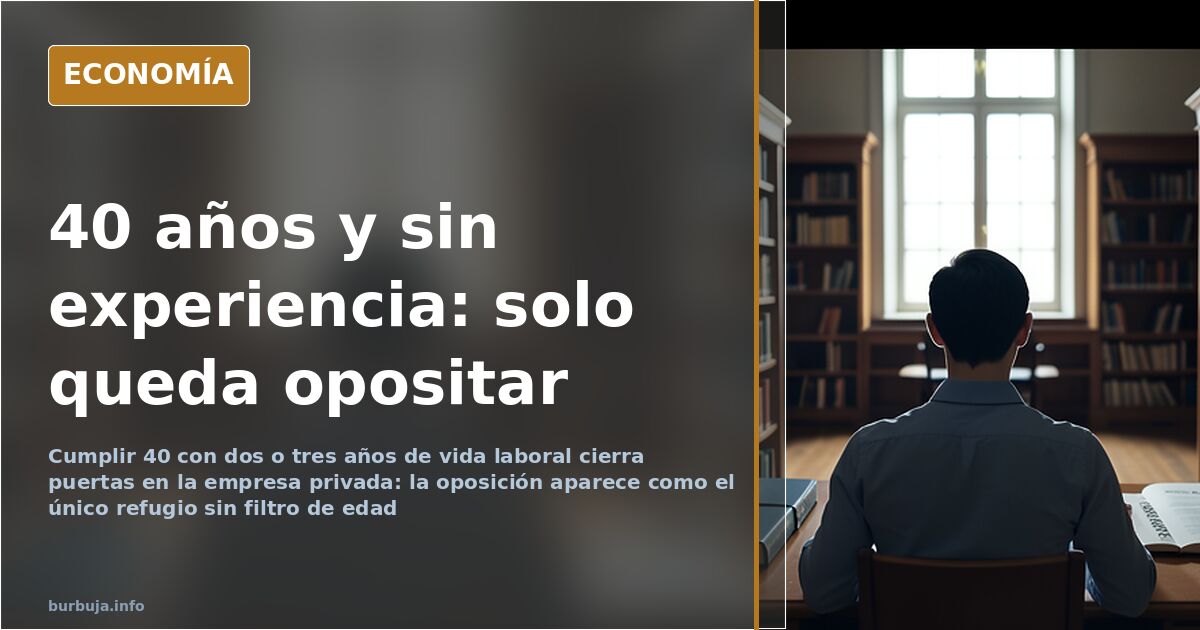
Reaching 40 with only two or three years of work history turns the private market into a wall. This analysis argues that despite accumulated skills and degrees, age filters and demands for prior experience eliminate candidates before interviews even start. The uncomfortable conclusion is clear: if the private sector doesn't call, the only door that doesn't ask about age is the *oposición* (civil service exam).
The starting narrative is specific. A mathematics teacher candidate describes dozens of interviews where age was the first filter and experience the second: he was asked for five to ten years in languages like Python or Java, having only programmed on his own without payroll proof. The result, he says, is accepting the role of *carnaza de oposiciones* (exam fodder): there are no age limits or experience requirements to apply.
What the Private Market Demands at 40
The diagnosis rests on a paradox many recognize: knowing how to do the job isn't the same as being able to prove it. Experience is measured in contributed years, not projects. Those who coded alone, without a company behind them, compete with a CV they cannot fill.
To this adds the calendar. At 40, you're no longer young enough to restart, but not old enough to stagnate until retirement. It's the bracket where the productive fabric decides whether to make you middle management or leave you out. And that decision is rarely communicated.
Civil Service Exams Don't Guarantee a Spot: Funnel Numbers
The premise itself admits the problem. *Oposiciones* don't ensure anything and there aren't spots for everyone; comparing them to *the Hunger Games* isn't rhetorical. Still, the personal calculation is different: studying justifies the day, entertains, and avoids drifting around the streets.
There's a nuance general pessimism overlooks. In technical specialties like mathematics, teacher demand exceeds supply in several regions, to the point where some get jobs just by showing up for the exam. The *oposición* stops being a dead end and becomes a leaky funnel.
The 10th Grade Classroom Doesn't Forgive
The harshest objection doesn't come from the market, but from the desk. An unseasoned teacher facing a group of teenagers is a trial by fire, and skepticism about their ability to hold up is explicit. Theory passes; the classroom is survived.
The other reproach is class-based: those who can afford to take exams at 40 without income live, according to this reading, off family support. The answer doesn't deny the help, but frames it in a context of unaffordable housing and a labor future that doesn't invite early independence.
The Plan B Nobody Wants to Name
When the *oposición* fails, options narrow to survival trades: taxi driver, concierge, security guard, waiter. There's also the temptation of social benefits as a way of life, with warnings that margins are closing and future cuts will settle accounts.
Self-employment is proposed and discarded almost instantly. Starting a business requires capital, a sales network, and guts—three things age doesn't gift. Gold digging, driving trucks ahead of the boss, and other bar-stool solutions complete the repertoire.
The prediction, with reservations: *oposiciones* will remain the refuge for those the private market discards due to age, but won't absorb everyone. If math teacher demand holds, some will find accommodation. The rest will keep waiting for a call that never comes.
Also available in: Deutsch
Summary of a discussion on Burbuja.info - Foro de economía, actualidad y política., translated from Spanish and reviewed before publication. Read the full discussion (20 replies).
More summaries
-
Body Positivity Influencer Celebrates Texas Democratic Win From Sofa
A viral tweet shows a body positivity influencer celebrating the Democratic victory in Texas without leaving her couch, sparking debate on political discourse.
-
Spain Health Campaign Links Care to Residency
Spain's Ministry of Health launches a campaign asserting healthcare access based on residency, sparking debate over its scope and message.
-
Vasectomy, Inheritance, and a Son: The Unexpected Twist
A vasectomy case involving a much younger partner raises questions about inheritance security, medical reversibility, and financial motives.
-
Are Spaniards White? The Debate on Racial Labels
The term 'white' excludes much of Southern Europe. Debates on Spanish Caucasian identity mix genetics, tourism, and diversity quotas.
-
PSOE and Railways: The Pattern Ignored by Many
Railways, savings banks and layoffs: a recurring pattern under PSOE rule. Analysis focuses on economic incentives rather than bad luck.
-
High meat prices stall sales as shoppers reject costly cuts
Meat over €15/kg slows purchases, leaving trays unsold and prompting consumer skepticism about pricing.