
A Menorah in the Office of Ceuta's President
A menorah, crosses, and virgins coexist in the office of Ceuta's president. The symbolic gesture and its political reading are under scrutiny.
English · Original discussion in Spanish · Published
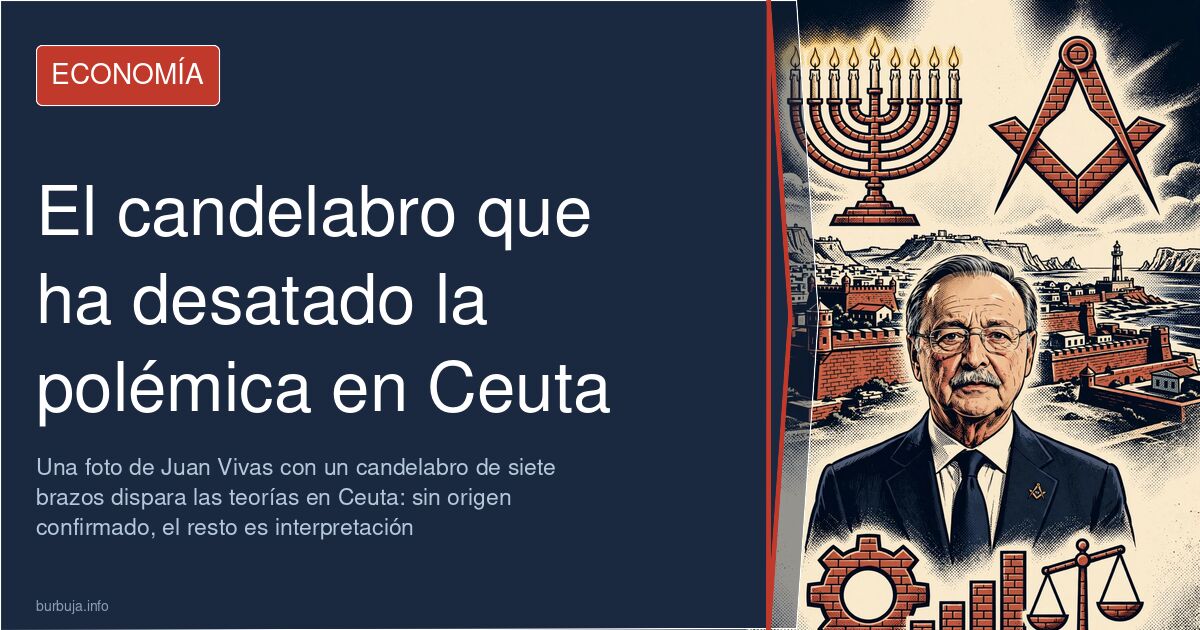
A Menorah in the Office of Ceuta's President
What does a menorah —the Jewish candelabra— do in the official office of Ceuta's president? The image of the object in the office of the autonomous city's highest official peine a discussion that goes far beyond mere office decoration. Ceuta, with its 85,000 inhabitants, is one of those places where identity labels clash most starkly.
What is the Menorah and Why Is It Controversial
A menorah is a ritual Jewish candelabra, one of the most recognizable symbols of the Hebrew tradition. Its presence in an institutional office allows for at least two opposing interpretations. One: some maintain it is a protocolary gift from the local Israeli community. The other: it is a deliberate symbolic choice, carrying political weight in a city where every identity gesture matters.
Those who defend the first interpretation emphasize that the object is on display, exposed like any other institutional present, which neutralizes any suspicion. Those who hold the second view question why the same standard is not applied to other symbols.
Ceuta, the City of Four Cultures
Ceuta is traditionally presented as a city of four cultures: Christian, Muslim, Jewish, and Hindu. The Jewish community has historical presence in the area, and the Hindu community, primarily commercial in profile, settled mainly from the 1950s and 60s with bazaars and small businesses. This mixed character is precisely what gives meaning to the gesture: in a territory with such composition, a gift from one confession is not an alien body, but the logic of institutional courtesy.
The Rest of the Office: Virgins, Crosses, and a Portrait of Juan Carlos I
According to one participant, that same office houses various figures of the Virgin Mary, including the Virgen de África, patroness of Ceuta, a cross, a soldier with a morion helmet, and a large-format portrait of Juan Carlos I. The menorah does not float alone in an empty room: it is part of a heterogeneous collection, almost like a cabinet of curiosities, suggesting a politician accumulating gifts from all confessions.
The Figures Surrounding the Issue
Behind the symbol lies money. The debate includes a calculation that spending allocated to migrant minors in the city amounts to around 100 million euros, based on a population of 85,000 people. This is a figure attributed and lacking verified public breakdown, but it explains why a candelabra becomes political ammunition: the gesture matters less than what is attached to it.
The Fundamental Question
The real discussion is not whether the object is beautiful, but whether a public office can decorate its office with religious symbols without giving them any meaning. And the honest answer, given these facts, is that we do not know. What we do know is that in the same office coexist a menorah, a virgin, and a portrait of the emeritus king. Whether that is pluralism or simple accumulation of gifts, let the voter decide.
What does a menorah —the Jewish candelabra— do in the official office of Ceuta's president? The image of the object in the office of the autonomous city's highest official peine a discussion that goes far beyond mere office decoration. Ceuta, with its 85,000 inhabitants, is one of those places where identity labels clash most starkly.
What is the Menorah and Why Is It Controversial
A menorah is a ritual Jewish candelabra, one of the most recognizable symbols of the Hebrew tradition. Its presence in an institutional office allows for at least two opposing interpretations. One: some maintain it is a protocolary gift from the local Israeli community. The other: it is a deliberate symbolic choice, carrying political weight in a city where every identity gesture matters.
Those who defend the first interpretation emphasize that the object is on display, exposed like any other institutional present, which neutralizes any suspicion. Those who hold the second view question why the same standard is not applied to other symbols.
Ceuta, the City of Four Cultures
Ceuta is traditionally presented as a city of four cultures: Christian, Muslim, Jewish, and Hindu. The Jewish community has historical presence in the area, and the Hindu community, primarily commercial in profile, settled mainly from the 1950s and 60s with bazaars and small businesses. This mixed character is precisely what gives meaning to the gesture: in a territory with such composition, a gift from one confession is not an alien body, but the logic of institutional courtesy.
The Rest of the Office: Virgins, Crosses, and a Portrait of Juan Carlos I
According to one participant, that same office houses various figures of the Virgin Mary, including the Virgen de África, patroness of Ceuta, a cross, a soldier with a morion helmet, and a large-format portrait of Juan Carlos I. The menorah does not float alone in an empty room: it is part of a heterogeneous collection, almost like a cabinet of curiosities, suggesting a politician accumulating gifts from all confessions.
The Figures Surrounding the Issue
Behind the symbol lies money. The debate includes a calculation that spending allocated to migrant minors in the city amounts to around 100 million euros, based on a population of 85,000 people. This is a figure attributed and lacking verified public breakdown, but it explains why a candelabra becomes political ammunition: the gesture matters less than what is attached to it.
The Fundamental Question
The real discussion is not whether the object is beautiful, but whether a public office can decorate its office with religious symbols without giving them any meaning. And the honest answer, given these facts, is that we do not know. What we do know is that in the same office coexist a menorah, a virgin, and a portrait of the emeritus king. Whether that is pluralism or simple accumulation of gifts, let the voter decide.
Summary of a discussion on Burbuja.info - Foro de economía, actualidad y política., translated from Spanish and reviewed before publication. Read the full discussion (68 replies).
More summaries
-
Sánchez, questioned in Congress about minors wandering Ceuta after tourist surge: "Ask Vivas"
Prime Minister Pedro Sánchez distances himself from the minors' situation in Ceuta, passing responsibility to the autonomous city president, Juan Vivas.
-
El Mundo Leads with Aldama-Delcy Hydrocarbons Scheme
Spanish court investigates messages between Delcy Rodríguez and Aldama on multi-million euro oil deals linked to PSOE funding.
-
Euthanasia in Old Age: Autonomy vs. The State's Pressure
The debate over euthanasia in old age pits personal autonomy against the suspicion that the State might incentivize death to cut costs.
-
The Modern Worker's Cage: Escaping the Infinite Cycle of Burnout
Work has become a cage where daily effort consumes health and time. Discover why we push ourselves so hard and how to break the cycle.
-
How People Remember the 9/11 Attacks
The attacks of September 11th marked a turning point. Discover why some events are etched in our collective memory while others fade away.
-
Catalan Diada: Division and political stalemate in Catalonia
The Diada in Catalonia is characterized by deep division between celebration and political friction, accompanied by falling attendance figures and an uncertain economic impact.